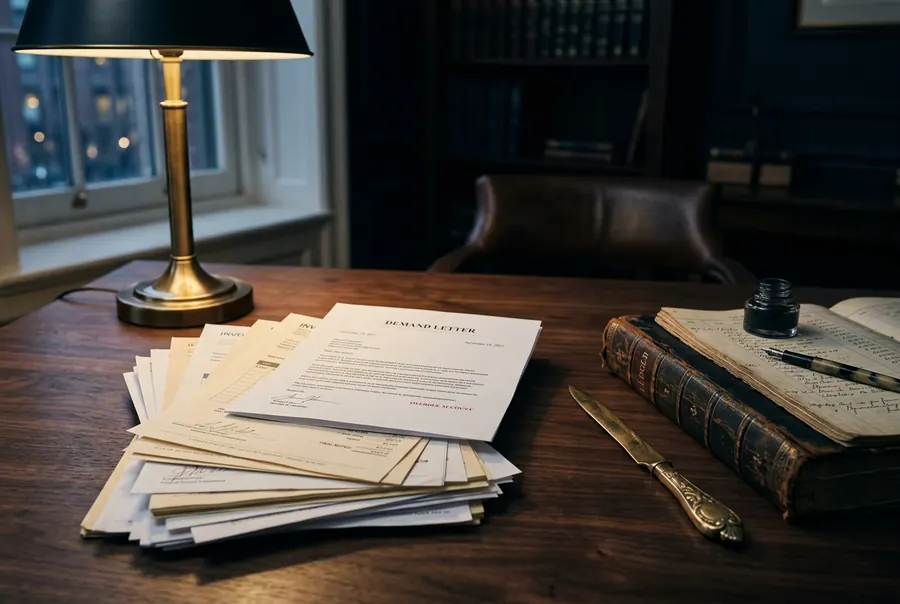
A customer owes $18,000 but sends a $6,000 check with “payment in full” written on it. You need the cash, so you deposit it and plan to collect the balance later. That decision could extinguish the remaining claim. For California businesses and individuals, a check marked payment in full can create an enforceable settlement under the right circumstances. Here is what California law requires, why crossing out the notation may not protect you, and what to review before accepting a disputed payment.
When a check marked payment in full can settle a debt
The legal concept is “accord and satisfaction”: an agreement to accept substitute performance—often a lesser payment—in resolution of an obligation, followed by performance of that agreement. California Commercial Code § 3311 governs this issue when someone uses a negotiable instrument, commonly a check, tendered in good faith as full satisfaction of a claim that is unliquidated or subject to a bona fide dispute.
A “payment in full” notation does not automatically erase every unpaid balance. Under § 3311, the person against whom the claim is asserted generally must prove all of the following requirements for discharge:
- The check was tendered in good faith as full satisfaction of the claim.
- The amount was unliquidated, meaning not fixed, or subject to a bona fide dispute.
- The creditor obtained payment of the check.
- The check or an accompanying written communication contained a conspicuous statement that the payment was offered in full satisfaction of the claim.
Exceptions and knowledge rules can change the result. Still, when these requirements are met, depositing the check can discharge the disputed claim even though the creditor intended to pursue the rest.
The statute applies to more than formal collection lawsuits, but it concerns payment by a qualifying negotiable instrument, not every form of payment. It can affect unpaid invoices, disputed service fees, construction payments, and other monetary claims paid by such an instrument. Reviewing the payment before deposit is an important part of California debt collection.
A genuine dispute matters more than the memo line
Suppose a consulting firm invoices a client for $18,000. The client contends that several deliverables were missing and sends $6,000 with a letter stating that the check settles the entire invoice. If the dispute is genuine and the other statutory requirements are satisfied, cashing that check may resolve the whole claim.
Compare that with a customer who acknowledges owing a fixed $18,000 balance but sends $6,000 marked “payment in full” solely because cash is tight. A shortage of funds, by itself, does not establish a bona fide dispute over the debt. The notation alone does not establish a discharge under § 3311.
Good faith also matters. A court may examine the parties’ communications, the basis for the disagreement, and the circumstances surrounding the payment. Neither side should assume that adding a few words to a check creates a settlement regardless of the facts.
The settlement language may appear in an accompanying letter rather than on the check itself. Review the complete payment package, including any referenced invoice numbers, before deciding whether the payment is ordinary partial payment or a conditional settlement offer.
Why crossing out “payment in full” is risky
A common response is to cross out the settlement language, write “accepted as partial payment,” or add “under protest” before depositing the check. Do not assume those steps preserve the remaining balance.
California Commercial Code § 1308 generally addresses reservations of rights, but expressly excludes accord and satisfaction from its protection. Writing “all rights reserved” is therefore not a dependable solution to a payment-in-full offer governed by § 3311.
The safer approach is to resolve the condition before collecting the funds. If you want to accept a partial payment without settling the rest, obtain a clear written agreement from the payer stating that the payment is not tendered as full satisfaction, may be accepted as partial payment, and does not release or compromise the remaining claim. A replacement check and accompanying communication consistent with that agreement reduce ambiguity. Do not rely solely on crossing out the notation or writing “under protest.”
If the payer refuses, the choice may be between accepting the proposed settlement and rejecting the conditional payment. That decision should account for the strength of the claim, collection costs, available evidence, and the payer’s ability to pay.
Exceptions exist, but they require careful review
Section 3311 contains protections that may prevent discharge in certain circumstances. These are not automatic fixes for every deposited check.
- A designated recipient for disputed payments: An organization may send the debtor a conspicuous statement, within a reasonable time before the tender of the check, directing communications concerning disputed debts—including instruments tendered as full satisfaction—to a designated person, office, or place. Subject to subdivision (d), the claim is not discharged if the organization proves that it sent this statement and that neither the check nor its accompanying communication was received at the designated destination.
- Repayment within 90 days: Under § 3311(c)(2), a claim is not discharged if the claimant proves that it tendered repayment of the instrument’s amount within 90 days after payment, subject to subdivision (d). This repayment provision does not apply if the claimant is an organization that sent a compliant designated-recipient statement under § 3311(c)(1)(A).
- Actual knowledge: Under subdivision (d), notwithstanding these exceptions, the claim is discharged if the person against whom it is asserted proves that the claimant, or an agent with direct responsibility for the disputed obligation, knew within a reasonable time before collection was initiated that the check was tendered in full satisfaction.
If the check has already cleared, seek advice promptly. A repayment deadline is not a reason to postpone review, and simply sending the money back may not resolve every situation.
Build a review process before the next check arrives
A practical payment policy can reduce accidental settlements:
- Ask staff to flag checks, letters, and envelopes containing settlement language.
- Pause deposits of conditional payments until someone with appropriate authority reviews them.
- Keep copies of the check, accompanying communications, invoices, and dispute history.
- Consider whether a statutory designated-recipient notice fits your organization’s collection process.
- Document any agreement allowing partial payment without releasing the balance.
For individuals sending these checks, the same caution applies: do not assume the creditor’s deposit necessarily ends the debt. A written settlement agreement is usually clearer about the amount, covered claims, and remaining obligations.
Talk to a California business attorney
Itkin Law offers a free consultation for businesses and individuals evaluating conditional payments or disputed debts. Schedule a free consultation or call (424) 603-8888.
This article is attorney advertising and provides general information only. It is not legal advice and does not create an attorney–client relationship. The law changes, and this article reflects the law as of its publication date. Every situation is different — contact us to discuss how the law applies to your exact circumstances. See our full disclaimer.