A returned check can leave a business or individual unpaid, with bank charges and time spent pursuing the debt. California law allows certain charges and, when specific requirements are met, additional civil damages. This article explains the bounced check penalty California law permits, how the written-demand process works, and what to consider before filing a lawsuit.
When California’s bounced check law applies
California Civil Code § 1719 establishes civil remedies for checks returned because of insufficient funds. It is not a blanket penalty for every returned payment. The reason for the return, the circumstances surrounding the check, and compliance with the statutory demand requirements matter.
Start by confirming what happened. A bank processing error, a disputed transaction, or a stop-payment instruction may require a different analysis than an ordinary insufficient-funds return. A returned check alone does not establish criminal fraud.
California businesses and individuals seeking payment should preserve:
- A copy of the check and the bank’s return notice.
- The invoice, contract, or other record showing why payment was owed.
- Messages about the transaction, payment, or any dispute.
- Records of bank charges, replacement payments, and credits.
These records help establish both the unpaid obligation and whether the statutory remedy applies. An attorney reviewing a debt collection matter can distinguish the underlying debt from any additional charges available under California law.
Service charges and additional civil damages
Under Civil Code § 1719, a qualifying insufficient-funds check may support a service charge of up to $25 for the first check and up to $35 for each subsequent check to the same payee. These are statutory limits, not permission to add any amount described as an administrative fee.
The statute also provides a route to additional damages when the required written demand is sent and the maker does not pay the required amounts within 30 days after the demand is mailed. The maker may then be liable for the remaining check amount plus damages equal to three times the check amount reduced by qualifying partial payments made toward the check or service charge during that 30-day period. The damages are subject to a minimum of $100 and a maximum of $1,500.
- A $200 check: If no payment is made during the 30-day period and the entire check remains unpaid, the additional damages may be $600, making the check amount and statutory damages total $800.
- A $1,000 check: Under the same no-payment assumptions, the additional damages are capped at $1,500, making that total $2,500.
These examples assume the statutory conditions are satisfied and no defense prevents recovery. Qualifying partial payments during the 30-day period reduce the amount used to calculate treble damages. When treble damages apply, Section 1719 does not permit recovery of its service charge or the costs of mailing the demand for that check. Court costs, attorney fees, and other claimed amounts require a separate legal basis; they are not automatically available simply because a check bounced.
Send a compliant demand before seeking damages
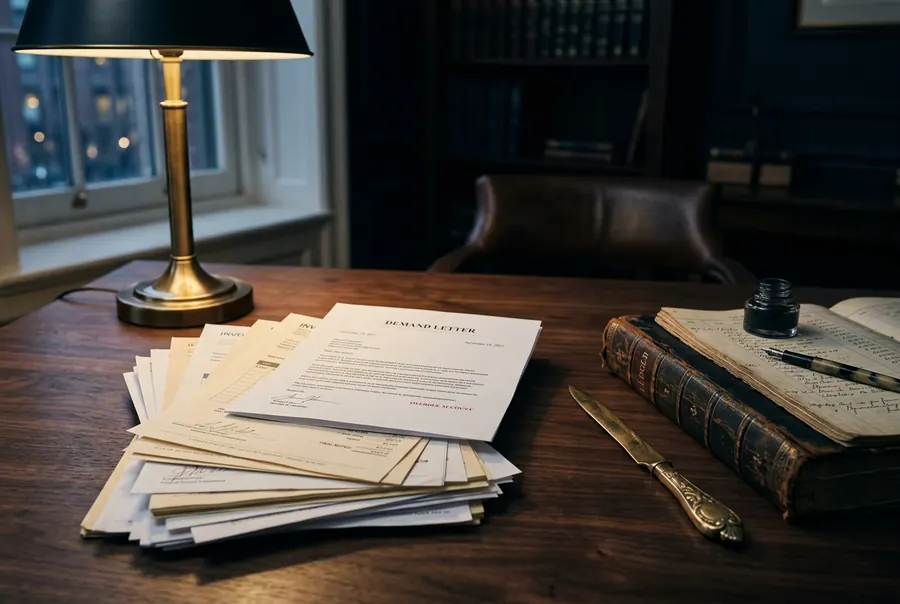
A routine overdue invoice or an email asking for payment is not a substitute for the statutory notice. For an insufficient-funds or no-account check, Civil Code § 1719 requires a written demand sent by certified mail that informs the maker of Section 1719, the check amount, and the applicable service charge before its treble-damages remedy becomes available. A stop-payment check requires notice substantially in the statutory form and compliance with additional delivery and dispute-resolution requirements.
The demand must give the check’s maker the required information and an opportunity to pay. A carefully prepared notice should:
- Identify the returned check, including its date and amount.
- State the check amount and applicable statutory service charge.
- Explain the 30-day payment period measured from the mailing date.
- Provide the required warning about additional damages and identify the applicable amount.
- Give clear payment instructions and accurate contact information.
- For a stop-payment check, substantially follow the notice form prescribed by Civil Code § 1719(c), including its statutory damages warning, good-faith-dispute warning, and required contact information.
Keep a copy of the demand and proof of certified mailing. For a stop-payment check, retain the signed certified-mail receipt showing delivery, or attempted delivery if refused, to the drawer’s last known address, as required by Section 1719(d). Calculate the deadline before filing a claim for statutory damages. If a replacement payment arrives, document it and update the balance immediately.
A demand should not suggest that arrest, prosecution, or a particular court result is inevitable. Section 1719 supplies a civil recovery process; it does not give a creditor authority to threaten criminal consequences to force payment.
Disputes and collection restrictions still matter
A check writer may dispute the goods, services, amount owed, or reason for the bank’s return. Section 1719 recognizes circumstances that can limit liability, including certain bank errors and good-faith disputes involving stopped payment. For a stop-payment check, the payee must comply with the statute’s dispute-resolution requirements, including reasonable efforts to resolve a good-faith dispute when notified of it. Review the facts rather than assuming every unpaid check qualifies for additional damages.
Separate debt-collection laws may also apply. The federal Fair Debt Collection Practices Act generally regulates covered debt collectors collecting consumer debts, not ordinary business debts. California’s Rosenthal Fair Debt Collection Practices Act, Civil Code § 1788 et seq., can reach a broader range of persons collecting covered consumer debts.
For example, an unpaid personal purchase and an unpaid commercial invoice may fall under different rules. Neither context permits inventing charges or misrepresenting legal remedies. If the debtor has filed bankruptcy, collection activity may also be restricted by the automatic stay.
Choosing a recovery path
If the demand does not resolve the matter, compare the amount at stake with filing costs, available evidence, potential defenses, and the debtor’s ability to pay. Small claims court may be suitable for some claims, depending on the claimant’s status and applicable monetary limits. Other matters may require a civil lawsuit.
Confirm the correct defendant. A check signed on behalf of a company does not automatically make its signer personally liable. The account, signature, underlying agreement, and applicable law all matter.
Obtaining a judgment and collecting it are separate steps. A payment arrangement or settlement may be practical, but its terms should clearly state the balance, deadlines, and treatment of any claimed penalties. Avoid double recovery when asserting both the unpaid contractual obligation and check-related remedies.
Talk to a California business attorney
Itkin Law offers a free consultation for businesses and individuals evaluating unpaid checks, statutory demands, and recovery options. Schedule a free consultation or call (424) 603-8888.
This article is attorney advertising and provides general information only. It is not legal advice and does not create an attorney–client relationship. The law changes, and this article reflects the law as of its publication date. Every situation is different — contact us to discuss how the law applies to your exact circumstances. See our full disclaimer.