A memorandum of understanding, or MOU, can look like a simple outline of a future deal. But signing one may create obligations before the final contract exists. So, is an MOU legally binding in California? Sometimes: the answer depends on the document’s language, the parties’ objective intent, and ordinary contract requirements—not its title. This article explains how California businesses and individuals can distinguish a preliminary discussion document from an enforceable agreement, identify binding clauses, and reduce uncertainty before signing.
Is an MOU legally binding in California?
An MOU is not automatically binding or nonbinding. California law generally looks at the substance of an agreement rather than the label on its cover. A document called a “memorandum of understanding” may function as a contract, while another may simply record negotiations.
California Civil Code section 1550 identifies the essential elements of a contract: parties capable of contracting, their consent, a lawful object, and sufficient cause or consideration. The parties’ consent must be mutual. Consideration generally means something of legal value exchanged, such as payment, services, or mutual promises.
An enforceable MOU also needs terms sufficiently certain for a court to determine the parties’ obligations. Courts assess objective expressions of intent, including the wording and surrounding circumstances, rather than an undisclosed belief that the document was only informal.
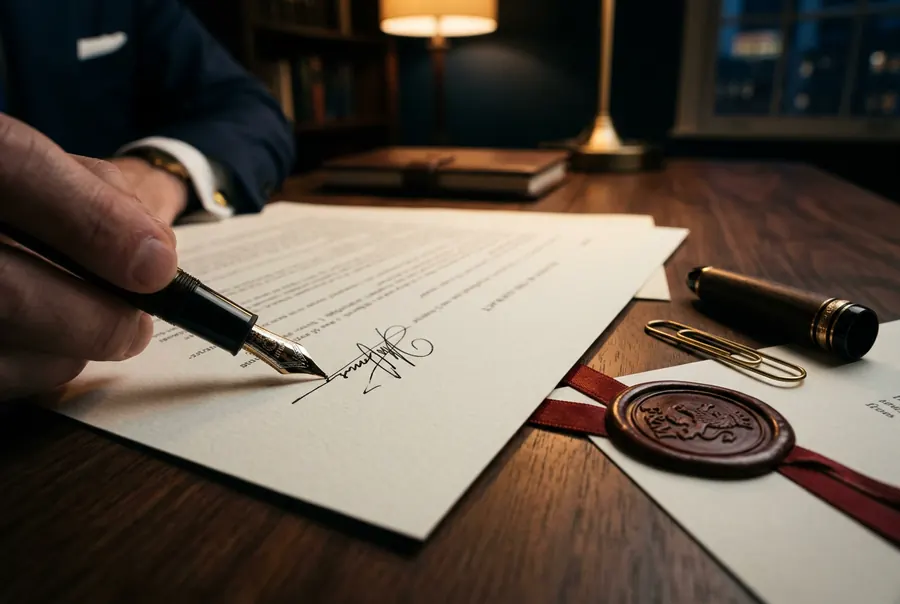
A signature is important evidence, but it does not automatically make every provision enforceable. Conversely, the absence of signatures does not always resolve the issue; some agreements can arise through conduct, subject to applicable writing requirements.
What language makes an MOU more likely to bind?
Start with the provisions describing legal effect. Language such as “the parties agree,” “shall,” or “this agreement is binding” can support enforceability. Statements that a document is “for discussion purposes only” or “subject to execution of a final agreement” can point the other way.
No single phrase should be read in isolation. A nonbinding heading may conflict with a detailed promise to pay, deliver goods, or begin work immediately. Read the document as a whole and check whether its provisions tell a consistent story.
Important questions include:
- Are the parties identified? Confirm the correct individuals or legal entities and each signer’s authority.
- Are the obligations clear? Look for defined deliverables, payment terms, deadlines, and conditions.
- Is a final contract required? Determine whether signing that contract is a condition to any obligation arising.
- Are essential terms unresolved? A promise to reach agreement later is not necessarily an enforceable deal.
A review through Itkin Law’s business contracts practice can help separate preliminary deal points from provisions intended to take effect immediately.
A nonbinding MOU can still contain binding clauses
Many MOUs use a mixed structure: the proposed transaction is nonbinding, but certain provisions are intended to be enforceable. For example, parties may agree not to disclose confidential information while remaining free to reject the eventual deal.
Common provisions intended to bind include:
- Confidentiality: Limits on sharing or using information exchanged during negotiations.
- Exclusivity: Restrictions on negotiating with other potential buyers or partners for a defined period.
- Expenses: Responsibility for legal fees, diligence costs, or other transaction expenses.
- Dispute procedures: Agreed rules for resolving disputes about enforceable provisions.
The MOU should identify those provisions expressly and explain whether they survive expiration or termination. Each clause still must satisfy applicable legal requirements; labeling it binding does not cure an unlawful or otherwise unenforceable term.
A promise to negotiate in good faith also deserves attention. Under California law, an agreement to negotiate may be enforceable as a contract distinct from an unenforceable agreement to agree. It does not require the parties to complete the transaction, but a failure to negotiate in good faith can support a claim for reliance damages—losses caused by reliance on the negotiation agreement, rather than expected profits from the proposed deal. Failure simply to reach agreement is not, by itself, a breach. Avoid including such a promise casually if you intend either party to remain free to stop discussions without further duties.
Writing requirements and conduct can affect the result
Some agreements require a signed writing. California Civil Code section 1624, commonly called the statute of frauds, covers specified categories, including agreements that by their terms cannot be performed within one year, sales of real property and leases longer than one year, certain promises to answer for another’s debt, specified real-estate brokerage or commission agreements, and other categories identified in the statute. A covered agreement generally must be evidenced by a writing subscribed by the party against whom enforcement is sought or that party’s authorized agent. Other laws impose writing requirements for particular transactions.
An MOU may satisfy an applicable writing requirement if it contains the transaction’s required essential terms and is subscribed by the party against whom enforcement is sought or by that party’s authorized agent, subject to transaction-specific rules and exceptions. Signatures by every party are not invariably required, and the document’s title alone establishes nothing. Additional formalities may apply depending on the transaction.
What happens after signing also matters. Paying a deposit, delivering services, exchanging invoices, or accepting performance may become evidence in a dispute about whether an agreement existed and what it required. That conduct does not automatically override an express nonbinding provision or an applicable writing requirement.
If you expect work to begin before the final contract, use a separate interim agreement defining the scope, payment, termination rights, and ownership of any resulting work.
What to check before signing or relying on an MOU
Before signing, decide which commitments should take effect now and which should wait. Then make those choices explicit rather than relying on the document’s name.
- State whether the transaction terms are binding or nonbinding.
- List any binding exceptions by section number.
- Define expiration dates, termination rights, and surviving obligations.
- Identify required approvals and conditions, such as financing or satisfactory diligence.
- Check for inconsistencies between the MOU, emails, and earlier drafts.
If a dispute has already developed, preserve the signed document, drafts, correspondence, payment records, and evidence of performance. Do not assume that calling the document an MOU ends the analysis.
Talk to a California business attorney
Itkin Law offers a free consultation to discuss your MOU, its intended legal effect, and questions about signing or enforcement. Schedule a free consultation or call (424) 603-8888.
This article is attorney advertising and provides general information only. It is not legal advice and does not create an attorney–client relationship. The law changes, and this article reflects the law as of its publication date. Every situation is different — contact us to discuss how the law applies to your exact circumstances. See our full disclaimer.