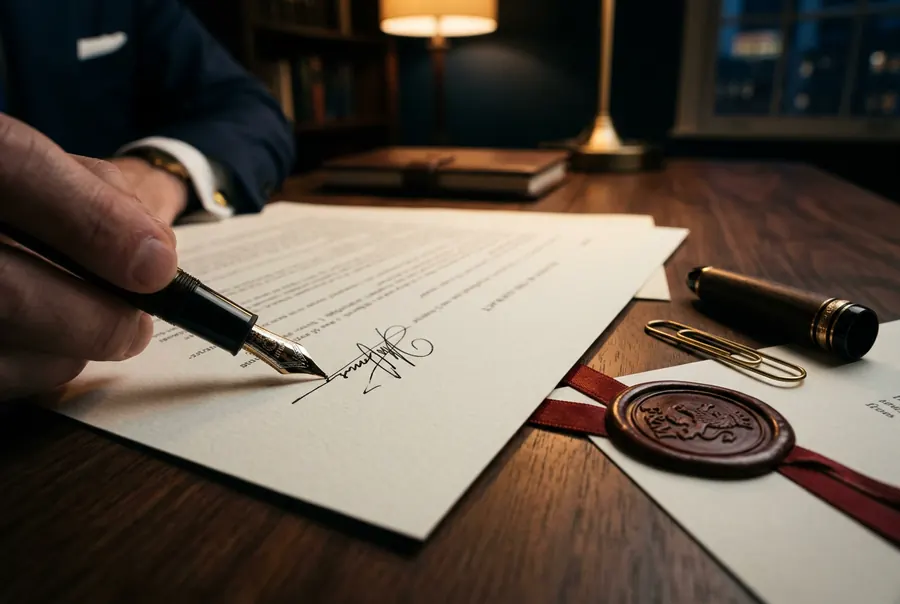
"We shook on it — is that worth anything?" More than most people think. California law enforces verbal (oral) agreements in a wide range of situations. But important categories of contracts must be in writing, oral deals are far harder to prove, and the deadline to sue is half as long. Here is where the line actually falls.
The general rule: yes, oral contracts are binding
A contract needs parties capable of contracting, mutual consent, a lawful object, and consideration — not a signature. If you agreed on the essential terms and both sides intended to be bound, an oral agreement to design a website, cater an event, or repair equipment is just as much a contract as a signed document. Courts enforce oral contracts regularly; the disputes are usually about proof, not validity.
The exceptions: contracts that must be in writing
California's statute of frauds, Civil Code § 1624, makes certain agreements invalid unless they (or some note or memorandum of them) are in writing and signed by the party to be charged. The main categories:
- An agreement that by its terms cannot be performed within one year
- A promise to answer for the debt or default of another person
- Contracts for the sale of real property, or leases of real property longer than one year
- Agreements authorizing an agent or broker to buy or sell real estate
- Agreements not to be performed during the promisor's lifetime
- Certain loan commitments over $100,000 made by institutional lenders
Separately, under California's Commercial Code § 2201, a contract for the sale of goods priced at $500 or more generally requires a writing, subject to exceptions for merchants, accepted goods, and admissions in court.
Two nuances matter. First, the one-year rule is read narrowly: a contract of indefinite duration that could be performed within a year usually falls outside it. Second, depending on the category and facts, a contract within the statute of frauds may be enforced despite the missing writing under doctrines such as part performance or estoppel, including where refusing enforcement after detrimental reliance would itself work a fraud.
The two problems with oral deals
Problem one: proof. In court, an oral contract becomes a credibility contest. What were the exact terms? Price, deadline, scope, contingencies? The party suing must prove the essential terms with reasonable certainty. Helpful evidence includes emails and texts referring to the deal, invoices, payments made and accepted, partial performance, witnesses to the conversation, and course of dealing. A follow-up email — "Confirming what we agreed today: $15,000, delivery by March 1" — can convert a handshake into a highly provable claim, and may itself satisfy the statute of frauds if it states the required terms and is electronically signed by the party to be charged.
Problem two: time. The statute of limitations for breach of an oral contract is two years (Code of Civil Procedure § 339), versus four years for written contracts (§ 337). Oral-contract plaintiffs who wait lose claims that would have survived on paper.
What this means for your business
- Never rely on a handshake for anything in the § 1624 categories — real estate, promises to cover someone else's debt, or multi-year commitments.
- Paper the deal, even minimally. A one-page signed memo or a confirming email beats a perfect memory. For recurring relationships, invest in a real written agreement reviewed by a business contracts attorney.
- Watch for "no oral modification" clauses. Written contracts often state they can only be amended in writing. California law complicates this — an oral modification executed by the parties may still be effective, and waiver or estoppel may apply (Civil Code § 1698) — but do not count on it.
- If someone breached an oral deal with you, move fast. Gather every text, email, and payment record now, and remember the two-year clock.
Talk to a California business attorney
Whether you are trying to enforce a handshake deal or want to make sure your next agreement never depends on one, Itkin Law can assess your position and put the right documents in place. Schedule a free consultation or call (424) 603-8888.
This article is attorney advertising and provides general information only. It is not legal advice and does not create an attorney–client relationship. The law changes, and this article reflects the law as of its publication date. Every situation is different — contact us to discuss how the law applies to your exact circumstances. See our full disclaimer.